The Psychology of Gambling: Why Players Chase Losses
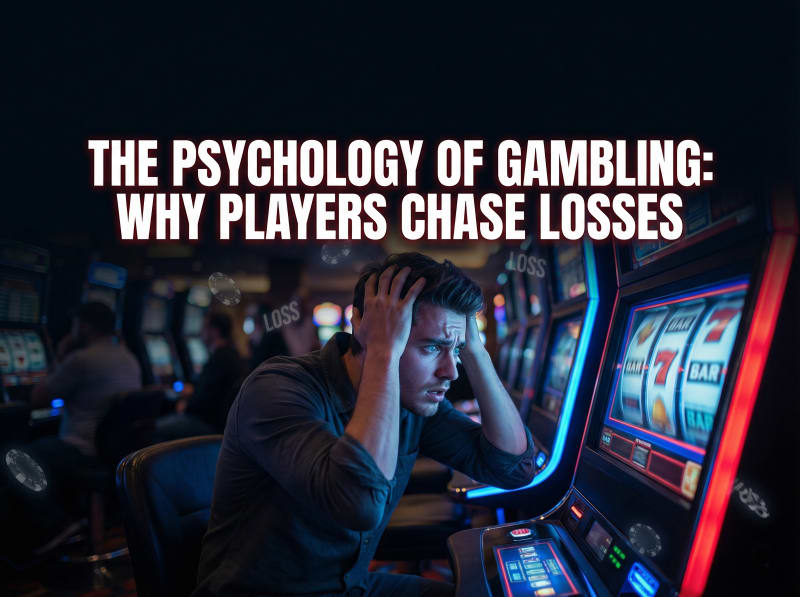
You lose $100.
Instead of stopping, you deposit another $100.
Then another.
And suddenly you’re no longer playing for fun — you’re playing to “get your money back.”
This behavior is called loss chasing, and it’s one of the most powerful psychological traps in gambling.
But why do players chase losses, even when they know it’s risky?
Let’s break down the psychology behind it.
What Is Loss Chasing?
Loss chasing happens when a player continues gambling in an attempt to recover previous losses.
Instead of accepting a losing session, the mindset becomes:
“I just need one big win to break even.”
The problem?
That thinking is driven by emotion — not probability.
Why Our Brain Hates Losing
Humans experience losses more intensely than gains.
Psychologists call this loss aversion.
Losing $100 feels worse than the pleasure of winning $100.
So when players lose, the brain reacts emotionally:
Stress increases
Decision-making becomes impulsive
Risk tolerance rises
This emotional discomfort pushes people to keep playing.
The Gambler’s Fallacy: “A Win Is Due”
One of the biggest mental traps is the belief that a win must come after multiple losses.
For example:
You lose 10 slot spins in a row.
You think: “Now it has to pay.”
But that’s not how probability works.
Every spin is independent.
If you haven’t read it yet, we explain this in detail in The Biggest Casino Myths Debunked, including how random number generators really work.
The brain looks for patterns — even when none exist.
Variable Rewards: The Slot Machine Effect
Slot machines are designed around variable reward schedules.
This means:
Wins are unpredictable
Rewards come randomly
Small wins keep hope alive
Psychologically, unpredictable rewards are more addictive than predictable ones.
It’s the same mechanism used in:
Social media notifications
Video games
Lottery systems
Uncertainty keeps players engaged longer.
The “Near Miss” Illusion
Have you ever seen:
Two jackpot symbols line up…
The third symbol stops just above or below the payline?
That’s called a near miss.
Near misses trigger almost the same brain response as actual wins.
They create:
Excitement
Motivation
False belief that you’re “close”
But in reality, the outcome was already determined by RNG before the reels stopped.
Near misses are psychological illusions — not signals that a win is coming.
How Wagering Requirements Increase Chasing
Bonuses can unintentionally increase loss chasing.
Example:
You deposit $100
Get $100 bonus
35x wagering required
Now you must place $7,000 in total bets.
Instead of stopping after a loss, you feel pressure to continue:
“I already wagered so much, I can’t stop now.”
This is called the sunk cost fallacy.
You continue because of what you’ve already invested — not because it’s rational.
If you don’t understand how playthrough works, read our full guide on casino wagering requirements explained before claiming bonuses.
The Illusion of Control
Some players believe:
Changing bet size affects outcome
Switching slots resets luck
Playing at certain times increases odds
These beliefs create an illusion of control.
In reality:
RTP is fixed
House edge remains constant
Each outcome is random
If you’re curious how RTP and house edge actually work, see our breakdown in Are Online Casinos Rigged? The Truth About RTP & House Edge.
Understanding the math reduces emotional decisions.
Dopamine and Reward Cycles
When you win, your brain releases dopamine — the “reward chemical.”
But here’s the interesting part:
Dopamine spikes not just during wins — but during anticipation.
The spin itself triggers excitement.
Even small wins can reinforce the behavior, keeping the cycle alive.
This is why gambling sessions often last longer than planned.
Why Smart People Still Chase Losses
Loss chasing isn’t about intelligence.
It’s about emotional activation.
When stress rises:
Logical thinking decreases
Risk-taking increases
Future consequences feel distant
Even experienced players can fall into the trap.
Awareness is protection.
How to Avoid Chasing Losses
Understanding psychology is step one.
Here’s how to stay in control:
1️⃣ Set a Fixed Budget
Decide before playing:
How much you’re willing to lose
When you will stop
Treat it like entertainment spending — not investment.
2️⃣ Set Time Limits
Long sessions increase emotional fatigue.
The longer you play:
The closer results move toward house edge
The more emotional decisions creep in
Short sessions = better discipline.
3️⃣ Avoid Playing to “Recover”
The moment your goal changes from fun to recovery, stop.
Chasing losses rarely works.
It usually compounds losses.
4️⃣ Understand the Math
Know that:
House edge exists
RTP is long-term
Variance creates streaks
The system isn’t against you personally — it’s statistical.
5️⃣ Choose Transparent Casinos
Playing at reputable platforms with:
Clear bonus terms
Transparent RTP
Structured verification
Reduces suspicion and frustration.
Established casinos like:
Provide clearer policies, which reduces emotional uncertainty.
Transparency supports better decisions.
When Loss Chasing Becomes a Problem
Occasional frustration is normal.
But warning signs include:
Depositing repeatedly after losses
Borrowing money to gamble
Hiding gambling activity
Feeling anxious when not playing
If gambling stops being entertainment and starts causing stress, stepping back is critical.
Responsible play is always the priority.
The Honest Truth About Gambling Psychology
Casinos are not designed to emotionally attack players.
But they are designed around:
Probability
House edge
Engagement mechanics
When players misunderstand variance or RTP, they interpret normal outcomes as unfair.
The more you understand psychology, the less power it has over you.
Final Thoughts
Loss chasing is a natural human reaction to discomfort.
But gambling math doesn’t adjust to emotion.
Every spin is independent.
Every game has a house edge.
And long-term results follow probability — not feelings.
The strongest advantage a player can have isn’t strategy.
It’s self-awareness.
When you understand your own psychology, you play smarter — and safer.